
Why engineering needs new tools
The Estonian Association of Engineers has issued a Letter of Support to nave tech, recognising the importance of new tools that aim to simplify engineering work and help engineers apply their knowledge more effectively.
According to Ando Leppiman, President of the Estonian Association of Engineers, initiatives that make engineering work more efficient and accessible are essential at a time when the profession faces rapid technological change and a shortage of qualified specialists.
In this interview, Ando Leppiman shares his perspective on the challenges facing engineers in Estonia and across Europe, the growing need for interdisciplinary skills, and why the profession must continue evolving.
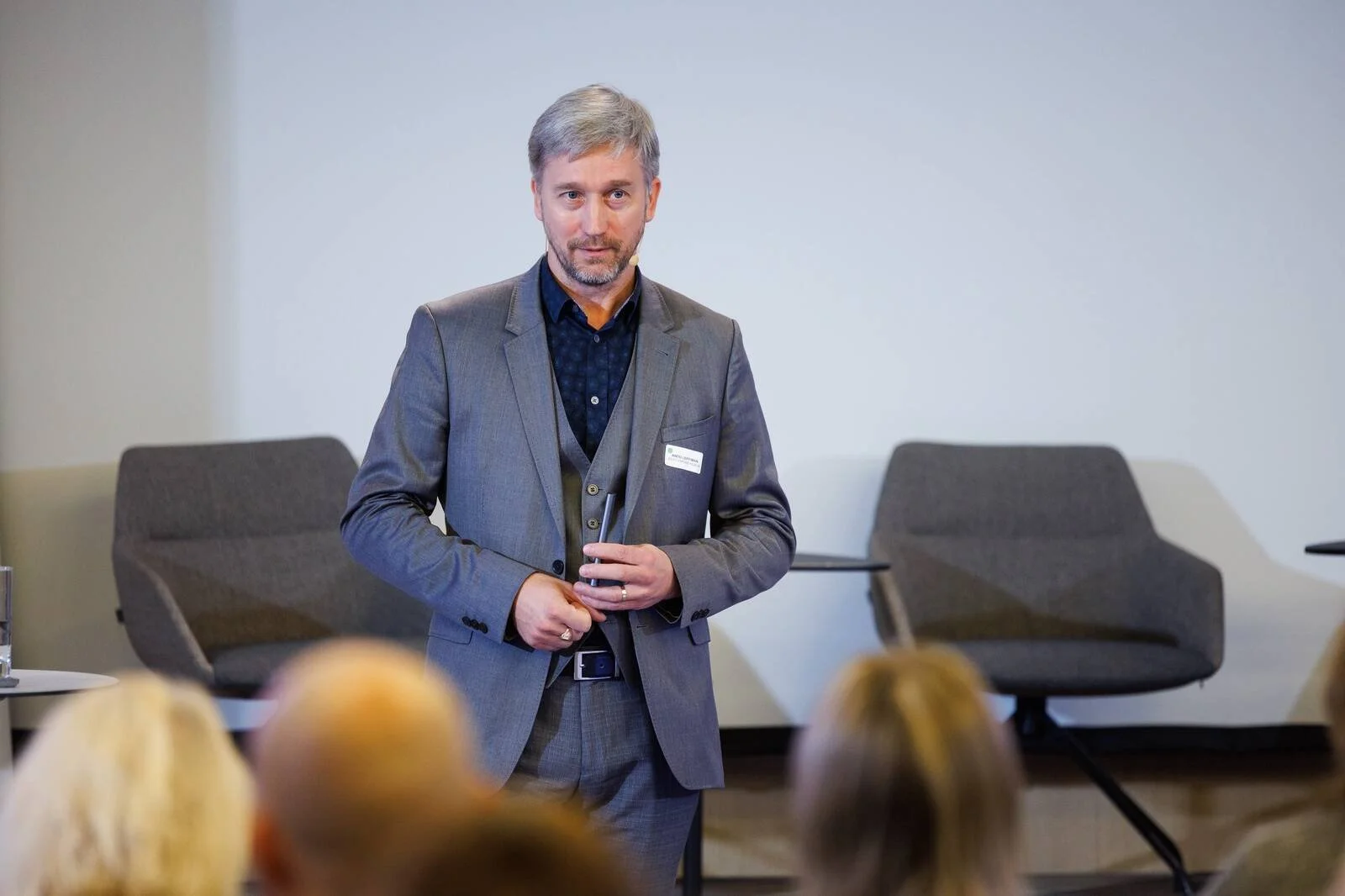
Ando Leppiman, President of the Estonian Association of Engineers. Photo: Raul Mee.
Engineering challenges across Europe are becoming increasingly complex
When discussing the main challenges facing engineers today, Leppiman points out that the situation in Estonia closely mirrors what is happening across Europe.
“The challenges related to engineering are quite similar across Europe and Estonia. The shortage of qualified engineers is widespread,” he explains.
At the same time, this shortage has created opportunities for Estonian engineers to gain experience abroad.
“This has given Estonian engineers a good platform to test their skills internationally. What is important is that they eventually return and apply that experience here in Estonia.”
Beyond the workforce shortage, engineering itself is becoming more interconnected with other fields.
“Engineers increasingly need to apply their knowledge across different disciplines and work closely with business, information technology and other sectors.”
This requires a continuous willingness to learn and adapt.
“Today it is no longer possible to learn a profession once and work in the same field for thirty years without continuously developing your skills.”
The demand for engineers continues to exceed supply
Research conducted by Kutsekoda highlights the scale of the challenge. Across several sectors — including manufacturing, construction, energy, and water management — the demand for engineering and technical specialists significantly exceeds the number of graduates entering the labour market.
According to these analyses, Estonia would need around 900 new engineers entering industry each year, yet the number of graduates is roughly one third of that demand.
At the same time, Leppiman stresses that the term “engineer” is often used too broadly.
“Different professional categories — engineers, technicians and managers — are often grouped together, which makes it difficult to clearly understand the actual need for highly educated engineers.”
From the perspective of the Estonian Association of Engineers, it is important to distinguish between engineers and technical specialists.
Internationally, engineers are typically defined as professionals with at least a master’s degree in engineering-related disciplines. In Estonia, engineering qualifications range from level 6 to level 8, reflecting both education and professional experience.
Generational change can strengthen engineering
Like many professions, engineering is also experiencing a generational transition as experienced professionals retire and younger engineers enter the field.
Leppiman sees this transition as a natural part of the profession’s evolution.
“Engineering has always experienced generational change. It is a normal part of development.”
Younger engineers often bring broader perspectives shaped by digital technologies and a different economic environment. When combined with the experience of senior engineers, this can strengthen the field.
“The combination of experience-based continuity and the initiative and broader perspective of younger generations can create a very strong foundation.”
Estonia has already experienced difficult periods in the past when the pipeline of new engineers was limited. Today, the situation appears more balanced.
Interdisciplinary thinking and AI will shape the next decade
Looking ahead, Leppiman believes that Estonia’s engineers have strong advantages that can help them remain globally competitive.
“One of Estonia’s strengths in recent years has been interdisciplinary thinking — understanding innovation and applying IT knowledge to traditional engineering fields.”
These capabilities will become even more important in the coming decade.
Another key development is the rapid emergence of artificial intelligence.
“Artificial intelligence is proving itself in almost every field. Estonian engineers must not miss the opportunities that these technologies create.”
Encouragingly, AI education is already being integrated across different levels of the education system.
“Estonia should see new technologies as opportunities, not as problems.”
Why the Estonian Association of Engineers supports nave tech
For the Estonian Association of Engineers, supporting initiatives like nave aligns with a broader view of what engineering represents.
“nave tech was created to solve a problem and simplify the work of engineers,” Leppiman says.
He compares technological progress in engineering tools to the evolution of everyday inventions.
“In simple terms, it is like reinventing the wheel. If there is a possibility to move forward faster, then we should use it.”
For Leppiman, engineering is fundamentally about transforming knowledge into real-world solutions.
“An engineer is a creator who connects science with practical implementation, turning theory into reality.”
This perspective is why the association sees value in supporting platforms that help engineers work more efficiently and develop new solutions.
“We wish nave tech success in creating new solutions for the engineering world.”
About the Estonian Association of Engineers
The Estonian Association of Engineers represents the professional community of engineers in Estonia and promotes engineering competence, professional standards and innovation across the sector.
About nave tech
nave tech is a B2B SaaS platform that helps engineering and science companies digitalise engineering knowledge and automate technical workflows — from raw data to engineering concepts, calculations and budgeting. The platform enables organisations to work faster, reduce manual effort and preserve critical engineering expertise.
